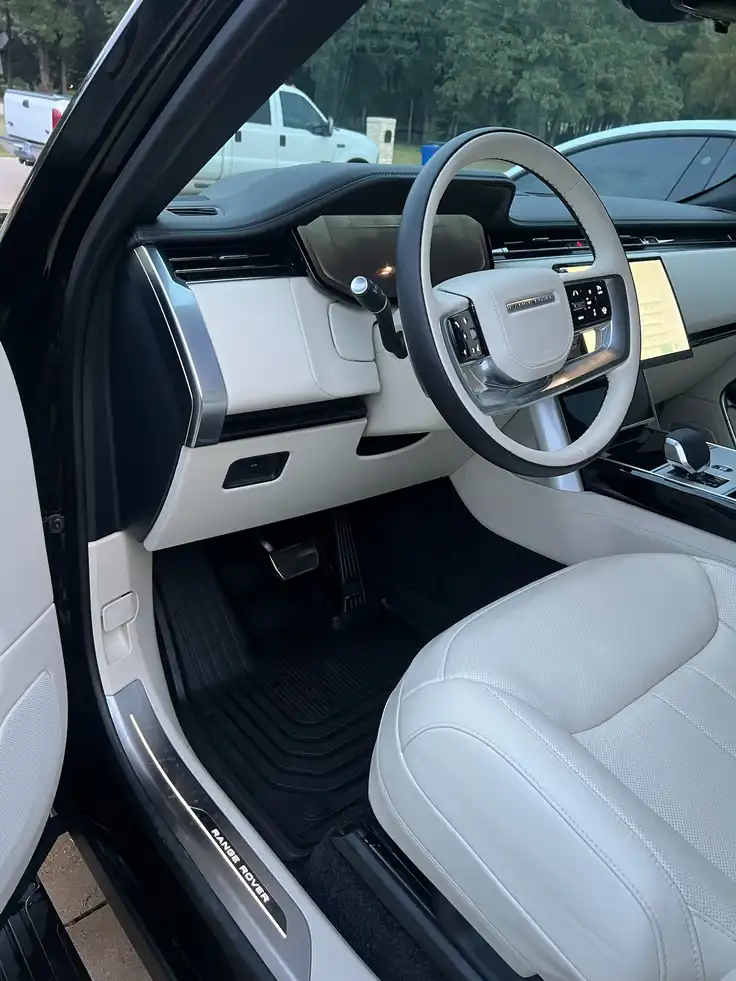
How to Freshen Your Car Interior (So It Actually Stays Fresh)
Your car’s interior takes a beating in North Texas. Summer heat turns the cabin into an oven, dust rolls in through the vents, and every drive-through meal, gym bag, and wet dog leaves a little something behind. If your interior has started to smell stale — not filthy, exactly, just not fresh — the fix is simpler than most people think. It just isn’t the fix most people reach for.
Quick Answer: Car odors don’t live in the air — they live in the surfaces: carpet fibers, seat fabric, headliner, and the HVAC system. Spraying a freshener changes the air for an afternoon. Actually freshening a car interior means removing the source: vacuum everything, wipe every surface, treat the fabric, and clean the vents. The list below runs from five-minute fixes to deep treatments.
1. Empty everything out
Start with the five-minute win. Trash, floorboard clutter, gym clothes, the fries that slid under the seat six weeks ago. Old food and damp items are the number-one odor source in most vehicles. Check the door pockets, seat-back pouches, under every seat, and the trunk, and rinse the cup holders.
2. Vacuum — including under the seats
Crumbs and organic debris break down in the heat, and carpet holds fine dust and food particles deep in the fiber. Slide each seat all the way forward, vacuum behind it, then slide it back and do the front. Hit the seat rails, console gap, and seat seams with a crevice tool — that’s where the smell hides in an otherwise tidy car.
3. Wipe down every hard surface
Dash, console, door panels, steering wheel, cup holders. Use an interior cleaner on a microfiber towel — skin oils and food film build an invisible layer that holds odor. And Texas raises the stakes: a cabin parked outside in July can pass 130°F, and that heat bakes those films into the plastics. It’s why a car sprayed with freshener in the morning smells stale again by evening.
4. Pull the floor mats and scrub them
Mats catch the worst of it — mud, spilled drinks, whatever your boots track in. Rubber mats get soap, a hose, and a full air-dry. Carpet mats get a scrub with carpet cleaner, then a complete dry in the sun. Don’t shortcut the drying: a damp mat sealed in a hot car is how a stale interior becomes a musty one.
5. Treat the fabric and upholstery
Fabric seats absorb everything that happens in the car. Work a fabric or upholstery cleaner in with a soft brush, then blot it out with a clean towel. Go light on the product — soaking the cushion pushes moisture into the foam underneath, where it lingers. The headliner needs the gentlest touch of all: blot, never scrub. One exception: if the smell you’re fighting is cigarette smoke, that’s a deeper problem than everyday staleness, and we cover it separately in how to get smoke smell out of your car for good. The same goes for weed smoke — that one takes the full extraction-and-ozone sequence in how to get weed smell out of a car.
6. Condition leather the right way
Leather doesn’t soak up odor the way fabric does, but the stitching, seams, and perforations trap grime that does. Clean with a dedicated leather cleaner, then condition. Conditioning is not optional here — Texas sun dries leather out fast, dry leather cracks, and cracked leather traps even more grime.
7. Replace the cabin air filter
The most skipped step on this list and one of the most effective. Every air-conditioned mile pulls cabin air through this filter, and in our part of Texas it loads up fast — caliche dust off county roads, construction dust from the new-build corridors around Forney and Fate, pollen in spring. A saturated filter makes the whole car smell like what’s trapped in it. On most vehicles it lives behind the glove box and takes ten minutes to swap.
8. Clean the vents and treat the HVAC system
If the smell hits hardest when the AC kicks on, the source is the system itself. Condensation sits on the evaporator core, and in humid stretches it grows mildew. Two fixes: run the fan on high with the AC off for the last few minutes of a drive to dry the evaporator, and if the smell persists, run a foaming evaporator cleaner through the system and wipe the louvers with a detailing brush. If what you’re fighting is visible growth on the carpet or seats rather than a vent smell, that’s a bigger problem than staleness — our guide on how to remove mold from a car interior covers it step by step.
9. Baking soda overnight
The old trick works because it absorbs instead of masking. Sprinkle it over carpet and fabric seats, leave overnight, vacuum thoroughly the next day. Skip the leather and keep it away from electronics.
10. What not to do
Two things undo more interiors than they fix. First, cover-up sprays and “odor bomb” foggers — they layer fragrance over the source, and in a week the car smells like the odor plus perfume. Second, the vinegar myth: a bowl of vinegar left overnight mostly makes the car smell like vinegar, and wiping interior plastics with strong vinegar can dull the finish. And don’t soak the carpet with household shampoo — without an extractor, you’re pushing dirty water into the padding, where it stays trapped and turns musty.
How to Get Dog Smell Out of Your Car
Dog odor earns its own section because it isn’t one smell — it’s two. Accidents leave organic compounds soaked into fabric, while everyday dog funk is coat oil and dander spread thin across every soft surface, refreshed each time a wet dog climbs in. Getting rid of dog smell in a car means matching the fix to the source, so here’s the protocol for each.
Accidents: enzymatic cleaner, not masking spray
If the smell traces back to an accident, only an enzymatic cleaner actually ends it. Urine odor comes from compounds bound into the fiber, and soap, fragrance, and “odor eliminator” sprays don’t break that bond — they sit on top of it, which is why the smell roars back on the first humid day. Enzymes digest the source itself, and once the source is gone, it stays gone.
The protocol: blot up everything you can with dry towels, saturate the spot with enzymatic cleaner slightly past the edge of the stain, and let it sit wet for the full dwell time on the label — enzymes only work while damp. Blot, air-dry with the doors open, repeat once if any trace remains. Don’t hit the spot with a regular cleaner first; residue from other products can deactivate the enzymes.
The wet-dog routine
For the everyday funk, the enemy is accumulation. After every wet ride — Cedar Creek lake days, rainy-week walks — crack the windows or open the doors and let the cabin dry completely before it bakes; a damp fabric seat sealed in Texas heat is a mildew starter kit. Then hold a cadence: shake out or wash the dog’s seat cover weekly, vacuum that seat and the carpet under it, and go over the fabric with a fabric-safe upholstery cleaner about once a month. If you’re fighting fur along with the funk, our guide on how to get dog hair out of your car pairs with this one.
Where extraction comes in
If you’ve done the enzyme work, kept the routine, and the car still announces the dog, the odor has moved into the seat foam and carpet padding. Removing pet odor from a car at that depth takes steam and hot water extraction — flushing the source out of the material instead of treating the surface. Everything above handles what’s within reach; extraction handles what isn’t.
When DIY stops working
If a smell returns within days of a thorough cleaning, the source is embedded — in the seat foam, the carpet padding, or the HVAC system. That’s where steam and hot water extraction earn their keep, pulling embedded grime and trapped water out of the material instead of pushing it around. That full reset is exactly what professional interior detailing that comes to you is built for — we arrive fully self-contained, with our own water tank and onboard power, anywhere in Kaufman, Rockwall, or Henderson County, plus East Dallas County.
Frequently Asked Questions
Why does my car smell musty?
Almost always moisture — a damp floor mat, a spill soaked into the carpet padding, or condensation on the AC evaporator that never fully dried. North Texas humidity makes it worse. Dry the source first, then treat the smell. For vent smells, run the fan on high with the AC off for a few minutes to dry the evaporator.
How do I keep my car interior smelling fresh?
Consistency beats intensity. Pull trash weekly, vacuum monthly, wipe hard surfaces down, clean food messes the day they happen, and replace the cabin air filter about once a year — more often on dusty county roads. A fresh interior is mostly the absence of odor sources, not the presence of fragrance.
Do air fresheners fix car odors?
No. Air fresheners mask odors — they layer fragrance on top without removing the source in the fabric, carpet, or vents. Once the fragrance fades, the odor is still there. They are fine as a finishing touch on a clean interior, but they cannot substitute for removing what is actually causing the smell.
When is it time for professional interior detailing?
When an odor comes back within days of cleaning, when stains have set into the fabric, or when the smell comes from the vents or deep in the seats. The source is in the seat foam, carpet padding, or HVAC system — places household tools cannot reach. Professional steam cleaning and hot water extraction pull it out instead of covering it up.
Freshen it once, keep it fresh
Knowing how to freshen your car interior comes down to one principle: remove the source instead of covering it. Work the list top to bottom and the freshness lasts — there’s nothing left underneath to come back. When the source has gone deeper than household tools can reach, Bridges Mobile Detailing brings the extraction equipment to your driveway. Call or text (469) 628-3882 and tell us what you’re smelling — if a cabin air filter and a vacuum will fix it, we’ll say so.
Rather skip the DIY and have this handled at your driveway? Bridges covers Kaufman County, Rockwall County, and the surrounding North Texas area. View the full service menu and pricing or book online in about two minutes.
More from the
journal.
DIY Ceramic Coating vs Professional: What Kits Get Right (and Wrong)
DIY ceramic coating vs professional: a Kaufman County mobile installer breaks down what kits get right, where driveway…
Read article →How to Remove Mold From a Car Interior (and When to Call a Pro)
Found mold in your car? Here's how to remove mold from a car interior step by step — fix the moisture, clean the surfac…
Read article →How to Get Weed Smell Out of a Car (What Works and What Doesn't)
Weed smell in a used car, rental return, or trade-in comes out with extraction and ozone — not sprays. The full removal…
Read article →PPF vs Ceramic Coating: An Honest Comparison From a Guy Who Only Sells One
PPF vs ceramic coating from a North Texas detailer who doesn't sell film — what each one protects against, real cost ra…
Read article →Toothpaste on Headlights: Does It Work? An Honest Answer
Toothpaste can clear a foggy headlight for a few weeks — then the haze comes back. Here is the abrasive mechanism, why…
Read article →Spring Car Detailing Checklist for Texas Vehicles
Get your vehicle ready for North Texas summer with this spring car detailing checklist. Bridges Mobile Detailing serves…
Read article →