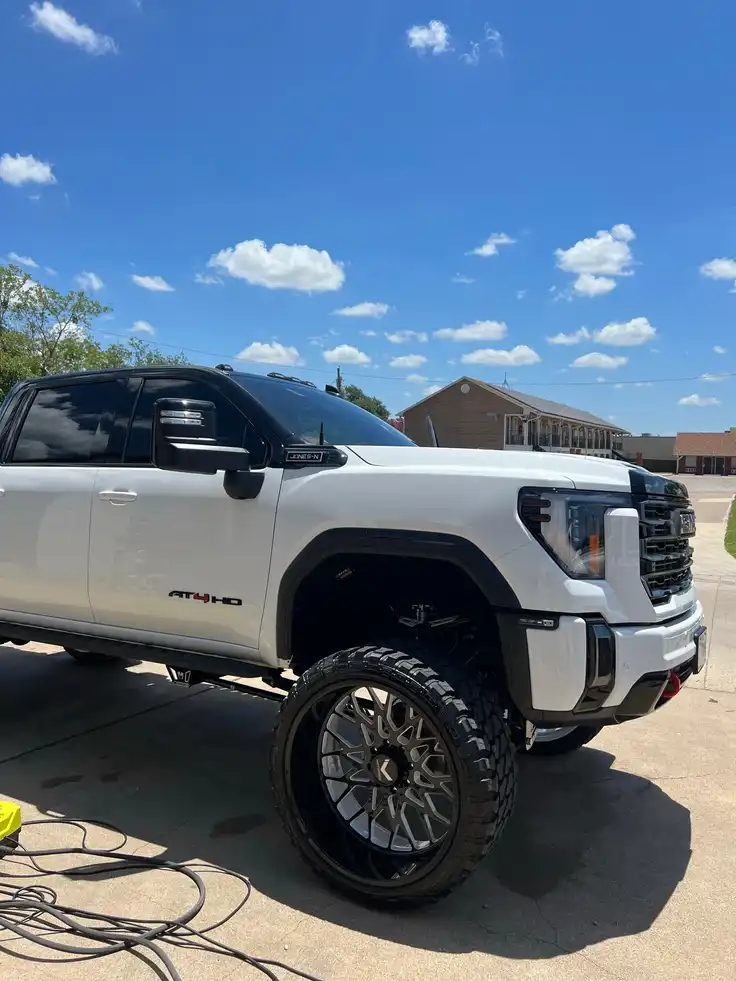
How Often Should You Detail Your Car in Texas? (A Realistic Schedule)
“How often should you detail your car” is the question I get more than any other, and the honest answer depends on where the vehicle parks, not what a generic calendar says. I detail across Kaufman, Rockwall, and Henderson Counties every week, and I watch identical vehicles age on different timelines based on garage access, lake proximity, and construction dust. Here’s the schedule I actually give people.
Quick Answer: For a daily driver parked outside in North Texas, a maintenance wash every 2–4 weeks and a full detail every 3–4 months keeps sun, limestone dust, and hard water from doing permanent damage. Garage-kept vehicles can stretch those intervals; lake-area and new-construction-area vehicles shouldn’t.
The Schedule
The answer up front — find your row, then read on for the why.
| Your situation | Maintenance hand wash | Full detail |
|---|---|---|
| Daily driver, parked outside | Every 2–4 weeks | Every 3–4 months |
| Garage-kept vehicle | Every 4 weeks — stretch it | Every 4 months, sometimes longer |
| Lake-area driveway (Ray Hubbard, Cedar Creek) | Every 2 weeks | Every 3 months |
| New-construction corridor (Forney, Fate) | Every 2–3 weeks | Every 3 months |
| Truck on county roads | Every 2–3 weeks | Every 3 months |
The maintenance wash is cheap insurance — it keeps contamination from ever bonding to clear coat. The full detail — clay bar, interior deep clean, fresh sealant, $129+ — is the reset button. Every price and the reasoning behind it lives in my full Kaufman County detailing price guide.
One more thing the table assumes: hand washing. A $12 tunnel wash every week mostly buys swirl marks — I lay out why in car detailing vs. a car wash.
Why Does Texas Shorten the Interval?
Paint doesn’t fail here from one thing. Seven enemies take turns — UV, limestone dust, hard water, pollen, bug acid, tree sap, road film — and every season hands the job to the next one.
Spring opens with pollen — mildly abrasive, and wiping it off dry grinds it in. Bug season starts alongside it, and bug acid etches paint within days in direct sun.
Summer is the main event: peak UV baking unprotected clear coat while sprinklers run hard against the heat. Overspray hits a hot panel, flashes off in minutes, and the minerals stay behind as etched rings.
Fall brings tree sap and the last of the bug acid, with afternoons still hot enough to bake both on.
Winter is mild but grimy — road film, that oily gray layer of exhaust residue and tire dust, builds on lower panels and glass, and construction dust lingers with less rain to rinse it.
No season takes the year off. That’s why the wash interval here is measured in weeks, not months.
How Should You Adjust for Your Situation?
Garage versus outside. UV is the biggest single variable. A garage-kept vehicle skips the sun, the sap, the bird droppings, and the overnight sprinkler cycle, so it earns the stretch in the table. But garage-kept doesn’t mean contamination-free — pollen and bug acid still ride home with you, and both need to come off promptly.
Driveway versus curb. Driveways fall in the middle — unshaded east- and south-facing ones are hardest on paint, tree-shaded north exposure is gentler. Curbside vehicles take full sun plus road grime; street parkers run the short end of every interval.
Lake proximity. Vehicles along the Lake Ray Hubbard corridor — The Shores, Chandlers Landing, Buffalo Creek, Heath Golf & Yacht Club — spot up faster than anything else I service. Humid mornings and irrigation overspray leave minerals that etch as they dry. Same story around Cedar Creek Lake, where tow vehicles pick up the same hard water the boats do. Lake vehicles hold the short end: washes every 2 weeks in summer, a full detail every 3 months.
Construction corridors. Forney, Fate, and the fast-growing parts of Rockwall generate limestone dust for the entire build-out. That fine white dust is ground rock — it bonds to clear coat and works like sandpaper if you wipe it dry. If new homes are going up within a mile of your driveway, don’t stretch your intervals.
Trucks on county roads. Caliche dust, mud, and brush down the sides — county-road trucks live the hardest life in my service area, which is why truck detailing starts at $175+. Wash every 2–3 weeks or the bed rails and rockers pay for it.
Whatever the calendar says, these signs mean you’re already overdue:
- Water no longer beads on the hood — your sealant or coating has quit
- Paint feels gritty under your palm — bonded contamination that needs clay bar
- Swirl marks show up in direct sunlight
- Headlights are yellowing or hazy
- Interior plastics have a film, or the carpets smell stale
Two or more of those and you need a full detail, not a wash. If the beading sign is the only one on the list, it’s the protection layer that’s due — I break down how often you should wax your car separately.
How Does Ceramic Coating Change the Math?
A coating doesn’t eliminate the schedule — it changes what each item costs you in time and risk. A coated car still needs the 2–4 week wash, but contamination sits on top of the coating instead of bonding, so it rinses off without agitation. Hard-water spots wipe away instead of etching. Sap and bug acid come off before they bite. Coated vehicles I maintain need far less corrective work at each full detail — which is the point.
My ceramic coating tiers: Standard at $399+ carries a 2-year warranty, Premium at $599+ carries a 3-year warranty, and Elite at $899+ adds two-stage paint correction before the coating goes down plus an annual inspection — I come back once a year to check it and decontaminate properly. Plan to re-coat when your tier’s warranty window ends: 2 years on Standard, 3 years on Premium or Elite.
Two honest caveats. Application needs a shaded or covered space to cure — garage, carport, or solid shade; I won’t coat a panel baking in direct sun. And a coating multiplies good habits, it doesn’t replace them — a coated car that never gets washed still builds mineral deposits on top of the coating. The full cost-versus-lifespan breakdown is in what ceramic coating costs and whether it’s worth it.
Frequently Asked Questions
How often should you wash your car?
Hand wash every 2–4 weeks for a daily driver parked outside in North Texas — every 2 weeks if you park near a lake or active construction. That means a proper hand wash, not a weekly $12 tunnel run. When someone asks me ‘how often should I wash my car?’ about a garage-kept vehicle, the honest answer is the 4-week end of the range; working out how often to wash your car on a curb or a county road means holding the short end. Winter doesn’t earn a pass — road film builds fastest then, so wash your car in winter on the same interval. Washing this often adds no wear when the method is right — the answer to ‘Can you detail your car too often?’ covers why.
Can you detail your car too often?
You can wash wrong, but you can’t really maintain too often. A proper two-bucket hand wash every 2 weeks adds no measurable wear — damage comes from method, not frequency: tunnel-wash brushes, dry-wiping dusty panels, and over-polishing that thins clear coat. Hold a hand wash every 2–4 weeks and a full detail every 3–4 months and frequency works for you, not against you.
What’s the best season to start a detailing schedule?
Early spring is the textbook answer — you reset the paint before pollen, bug season, and summer UV arrive. The realistic answer is whenever you decide to start, because whatever is bonded to your paint right now keeps doing damage until it comes off. Start with a full detail to get a clean baseline, then hold the wash interval from there.
Does ceramic coating mean you never wash your car?
No. A coated car still gets dirty — the coating just keeps contamination from bonding, so the same 2–4 week wash takes half the time and none of the scrubbing. Skip washes on a coated vehicle and minerals pile up on top of the coating, which shortens its working life and wastes what you paid for it.
How often should you do the interior vs the exterior?
The exterior sets the cadence because it takes the weather; the interior follows how you use the cabin. An adult commuter usually only needs interior work as part of the full detail every 3–4 months. Kids, pets, or a work truck change that — those cabins need attention every visit, and I offer interior detailing on its own at $125+ when the inside needs a reset without the exterior work.
Stop guessing — get on a schedule
I’m Nate. I answer my own phone and bring the rig — water tank and power onboard — anywhere in Kaufman, Rockwall, or Henderson County, no travel fees. Book online in about two minutes, or call or text (469) 770-9755 and tell me where you park. I’ll tell you the interval your vehicle actually needs.
Nate Bridges is the owner of Bridges Mobile Detailing — 5+ years of exterior care across Kaufman and Rockwall Counties through Bridges Mobile Detailing and Kaufman Pressure Wash.
Rather skip the DIY and have this handled at your driveway? Bridges covers Kaufman County, Rockwall County, and the surrounding North Texas area. View the full service menu and pricing or book online in about two minutes.
More from the
journal.
DIY Ceramic Coating vs Professional: What Kits Get Right (and Wrong)
DIY ceramic coating vs professional: a Kaufman County mobile installer breaks down what kits get right, where driveway…
Read article →How to Remove Mold From a Car Interior (and When to Call a Pro)
Found mold in your car? Here's how to remove mold from a car interior step by step — fix the moisture, clean the surfac…
Read article →How to Get Weed Smell Out of a Car (What Works and What Doesn't)
Weed smell in a used car, rental return, or trade-in comes out with extraction and ozone — not sprays. The full removal…
Read article →PPF vs Ceramic Coating: An Honest Comparison From a Guy Who Only Sells One
PPF vs ceramic coating from a North Texas detailer who doesn't sell film — what each one protects against, real cost ra…
Read article →Toothpaste on Headlights: Does It Work? An Honest Answer
Toothpaste can clear a foggy headlight for a few weeks — then the haze comes back. Here is the abrasive mechanism, why…
Read article →Spring Car Detailing Checklist for Texas Vehicles
Get your vehicle ready for North Texas summer with this spring car detailing checklist. Bridges Mobile Detailing serves…
Read article →